-

New Year, New Spotlight: Intersect Featured in Authority Magazine
Intersect: Student Voices begins 2026 with a milestone: a feature in Authority Magazine’s Young Change Makers series. In the interview, our editor-in-chief reflects on why Intersect exists: to elevate student work into public writing that strengthens civic thinking and credibility. The feature also highlights our editorial values of clarity, trust, and serious attention to youth…
-

Year in Review: Making the Invisible Visible
In 2025, Intersect: Student Voices reached an impressive audience in 107 countries, showcasing a student publication’s ability to engage a diverse readership while preserving the depth of its ideas. The featured essays explore the formation and sustainability of assumptions related to race, happiness, equality, objectivity, and social systems. Intersect remains committed to publishing analytically-grounded writing…
-

Debunking Race-Based Intelligence
Hannah Bachman examines how the concept of intelligence has historically been shaped by those in power, leading to biased definitions that marginalize alternative forms of intelligence. She critiques race-based theories of intelligence, revealing their political origins and highlighting the role of environment over biology in shaping cognitive abilities.
-

The Fast Food Logic of Information
Social media feeds have turned information into something we consume the way we eat fast food: quickly, constantly, and with little sense of what it is doing to us. This essay looks at how that “social media information diet” reshapes attention, credibility, and our picture of the world, and asks what it would take to…
-

Gun Violence in Baltimore: Industrialization, Inequality, and Intervention
James Hobelmann explores the gun crisis in America through the lens of Baltimore, linking its emergence to industrial decline, racial inequality, and social unrest. He underscores community-led initiatives centered on prevention and trust-building as crucial to confronting the problem’s structural causes.
-

The Things I Carry
Hope Bachman’s reflection, inspired by Tim O’Brien’s “The Things They Carried,” explores the emotional and physical weight carried by a high school student. Through everyday objects like a backpack, pens, and a perfume, she examines family ties, friendships, guilt, and love, revealing how these simple items embody resilience and connection.
-

Cúchulainn and the Work of Heroism
In The Táin, translated by Thomas Kinsella, Cúchulainn embodies the classic hero. He follows the three stages of the hero’s journey—call to adventure, trials and failures, and a final reward—and he proves his heroism through steadfast service to the people of Ulster. Kinsella’s portrayal aligns with a traditional hero: a figure marked by exceptional traits…
-

The Social Foundations of Objectivity
We often imagine objectivity as the product of clear thought. More often, it arises from institutional structures that hold reasoning accountable to shared standards. Bias is not a personal flaw but a structural condition, mediated through practices developed to institutionalize fairness.
-

Elegance Meets Risk in the Worlds of Amor Towles
Towles’s novels embody elegance while questioning the structures that sustain it, contrasting privilege and precarity to reveal how grace and resilience function across class lines.
-
Myth, Media, and the Making of Idols
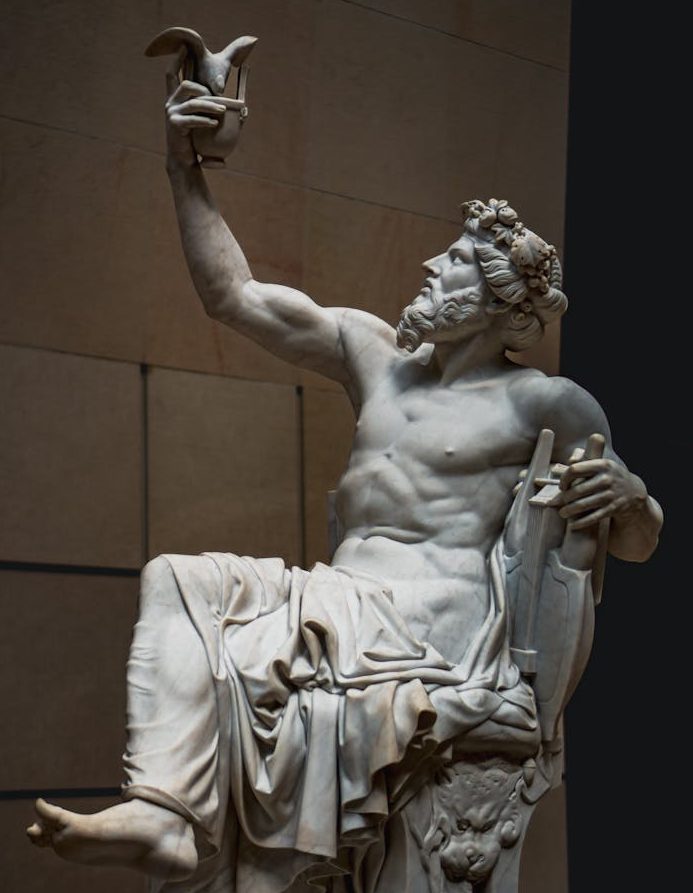
As Reese Deller observes, idolatry reflects society’s tendency to project its fears and aspirations onto figures both historical and contemporary, such as gods and celebrities. Modern culture mirrors these ancient roles in organizing authority and values, inviting reflection on how we grant power, interpret influence, and decide who is worthy of belief.
-

Vonnegut on Equality and Freedom
Henry Brett-Chin interprets Vonnegut’s “Harrison Bergeron” as a vision of equality turned coercive: weights burden the strong, radios disrupt thought, and masks hide beauty. Difference becomes a threat, not a strength. Yet the story critiques not equality itself but America’s Cold War fear of socialism, warning against mistaking sameness for justice and freedom.
-

Philip Roth and the Fragility of Military Brotherhood
Jack Kozinn examines how Sergeant Nathan Marx, in “Defender of the Faith,” navigates Sheldon Grossbart’s competing requests, exposing the tension between loyalty and rule. Roth suggests that true leadership demands impartial duty to all, underscoring both trust’s fragility and the moral precision fairness requires.
-

Wing to Wire, the Birth of Modern Communication Systems
Carrier pigeons sustained military and state communication for millennia, reliably delivering messages when other systems failed. Their success rested on a delicate balance between evolutionary instinct and human training. Yet as technology advanced, their role vanished. Travis Vance uses this example to show how progress often erases the very infrastructures that once held societies together.
-
Restrictive Reform: Anti-Immigration Legislation
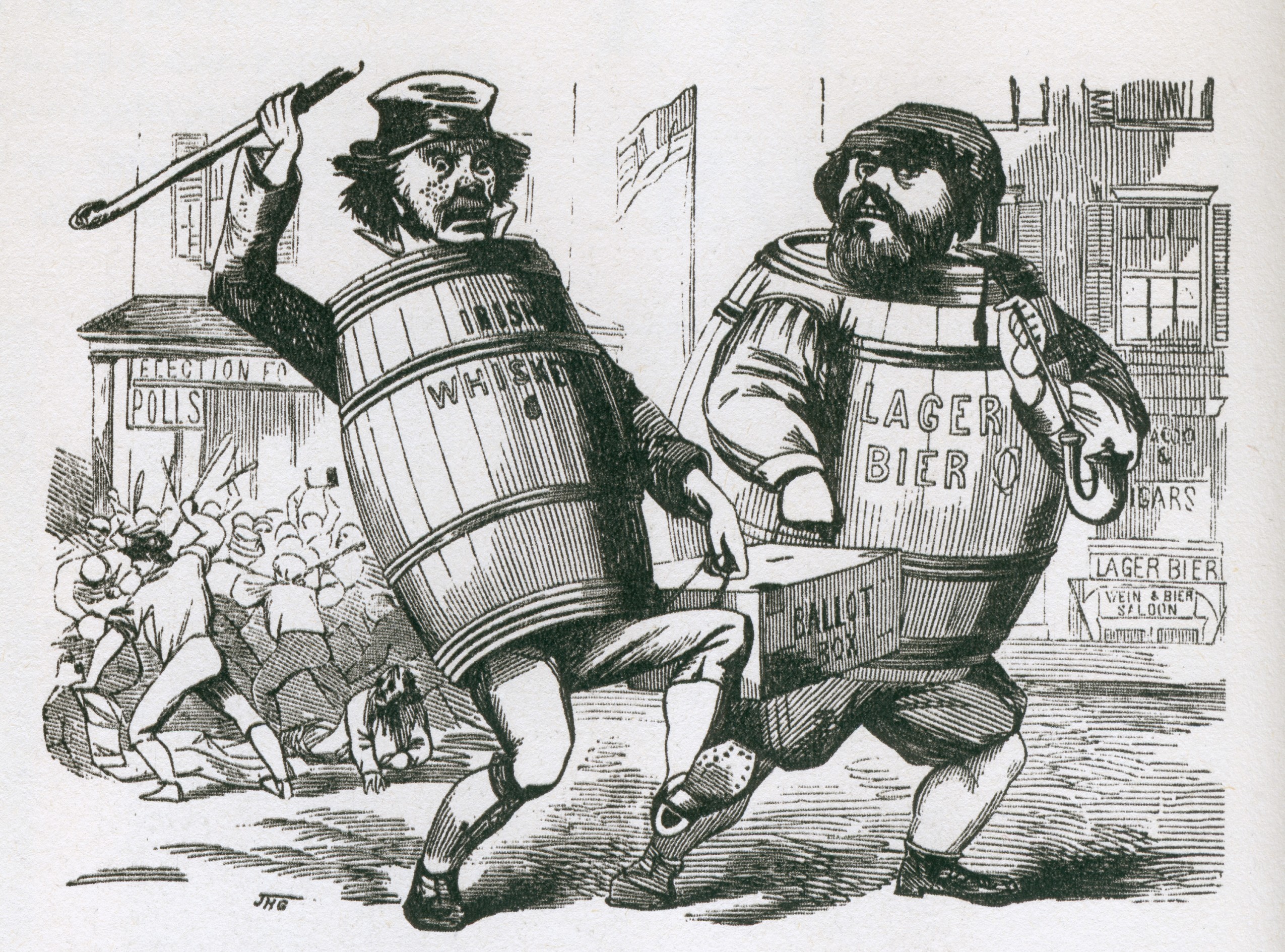
Declan McDonnell explains that the American Party Platform of 1856 reflects Know-Nothing nativism rooted in fear of Irish and Catholic immigrants. Framing exclusion as reform, it shaped political power through anti-immigrant policies. Lincoln’s critique exposed its contradiction with American ideals, and as anti-slavery movements rose, the party’s influence waned, revealing enduring tensions over religion, identity,…
-

What Makes Information Trustworthy?
Fact-checks alone cannot determine truth. Drawing on research from leading scholars, this post examines how other indicators of authorship, sourcing, review help audiences judge information and decide whether it deserves their trust.
-

Frederick Douglass and the Politics of Educational Access
Cyrus Welch contends that both the criminalization of literacy in slavery and the resurgence of book bans arise from the same instinct: fear of an informed public. His analysis connects past and present efforts to contain education, underscoring Douglass’s claim that learning itself is liberation.
-
Observing Nuanced Societies Through Intertextuality
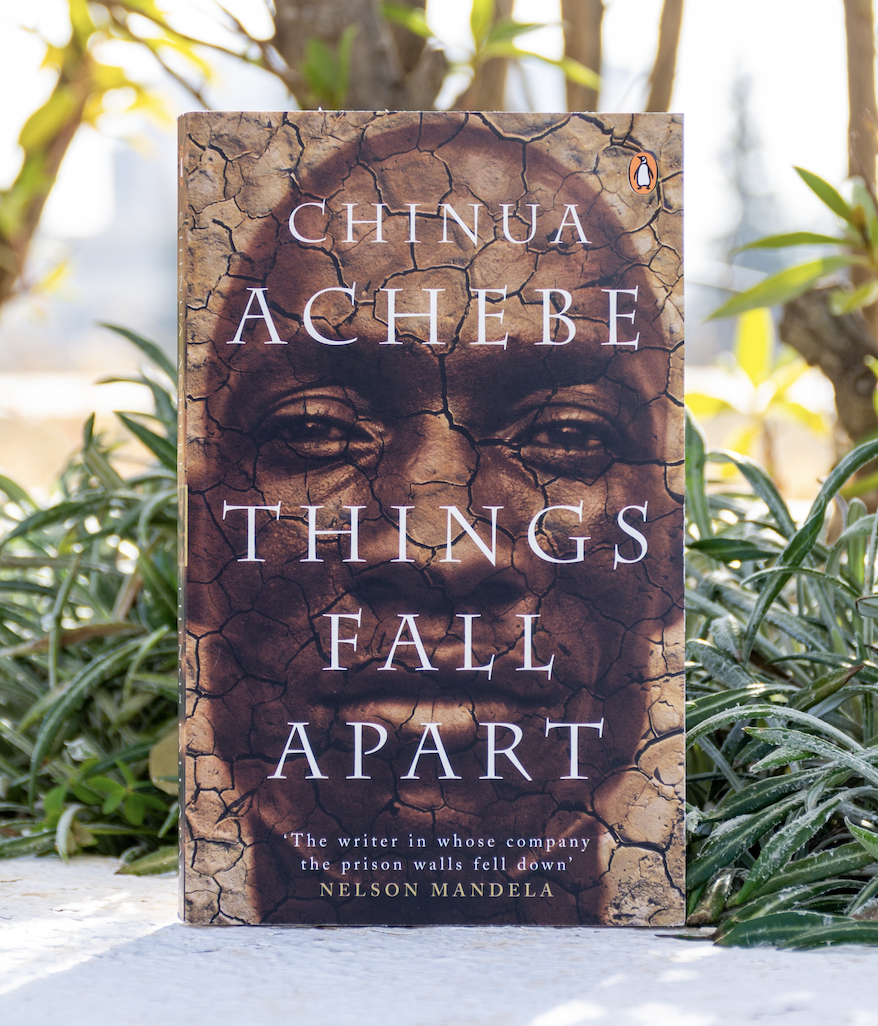
In Hope Bachman’s reading, Achebe, Gordimer, Walcott, and Le Guin expose the moral fictions that make violence seem inevitable. Across genres, they reveal how power sustains itself through narrative and superstition, urging readers to question the moral frameworks that normalize harm and to recognize trauma as both personal and political.
-

What We’re Missing When Everything Sounds Like Expertise
Modern media blurs the lines between reporting, commentary, and credible analysis. Markers that once signaled method and provenance have faded; performance too often passes for expertise. This essay examines how those cues eroded, why verification became harder, and what it now takes to distinguish reliable knowledge from opinion and misinformation.
-

Only A Pawn In Their Game?
Declan McDonnell observes that the Civil Rights Movement of the 1960s was not merely a reaction to visible violence and legal discrimination, but a profound confrontation with the invisible machinery of systemic racism embedded in American society. Among the tools activists employed, protest music arose as a powerful force for raising consciousness and exposing injustice.…
-

Inside the Fields, Outside the System: Lessons from an Immersion Experience
For Cyrus Welch, the invisible labor sustaining the American landscape reveals both moral contradiction and civic dependence. Fieldwork and family conversations show how policies translate into lived realities and how national reliance on unseen workers defines much of American life.
-

Health is Wealth Only If You Can Afford It
Hope Bachman argues that in America, health outcomes are heavily influenced by systemic factors such as income, food access, and policy decisions, rather than individual choice. She sheds light on the interconnected barriers faced by low-income families regarding nutrition and health.
-

Nature, Attention, and the Architecture of Interaction
Humans’ capacity to thrive depends on noticing what matters, yet fragmented environments scatter our attention and shrink our horizons. Natural places and well-designed civic spaces do the opposite: they restore focus and widen perspective. Through shared practices and relational thinking, these places cultivate trust, invite participation, and move us beyond narrow self-interest toward the common…
-

Bentham’s Calculus Gone Wrong?
In Reese Deller’s view, the pursuit of happiness has become a pursuit of metrics. The piece draws from philosophy and neuroscience to show why real fulfillment depends less on optimization than on alignment between values, purpose, and self-understanding.
-
Five Small Acts, in Response to David Brooks
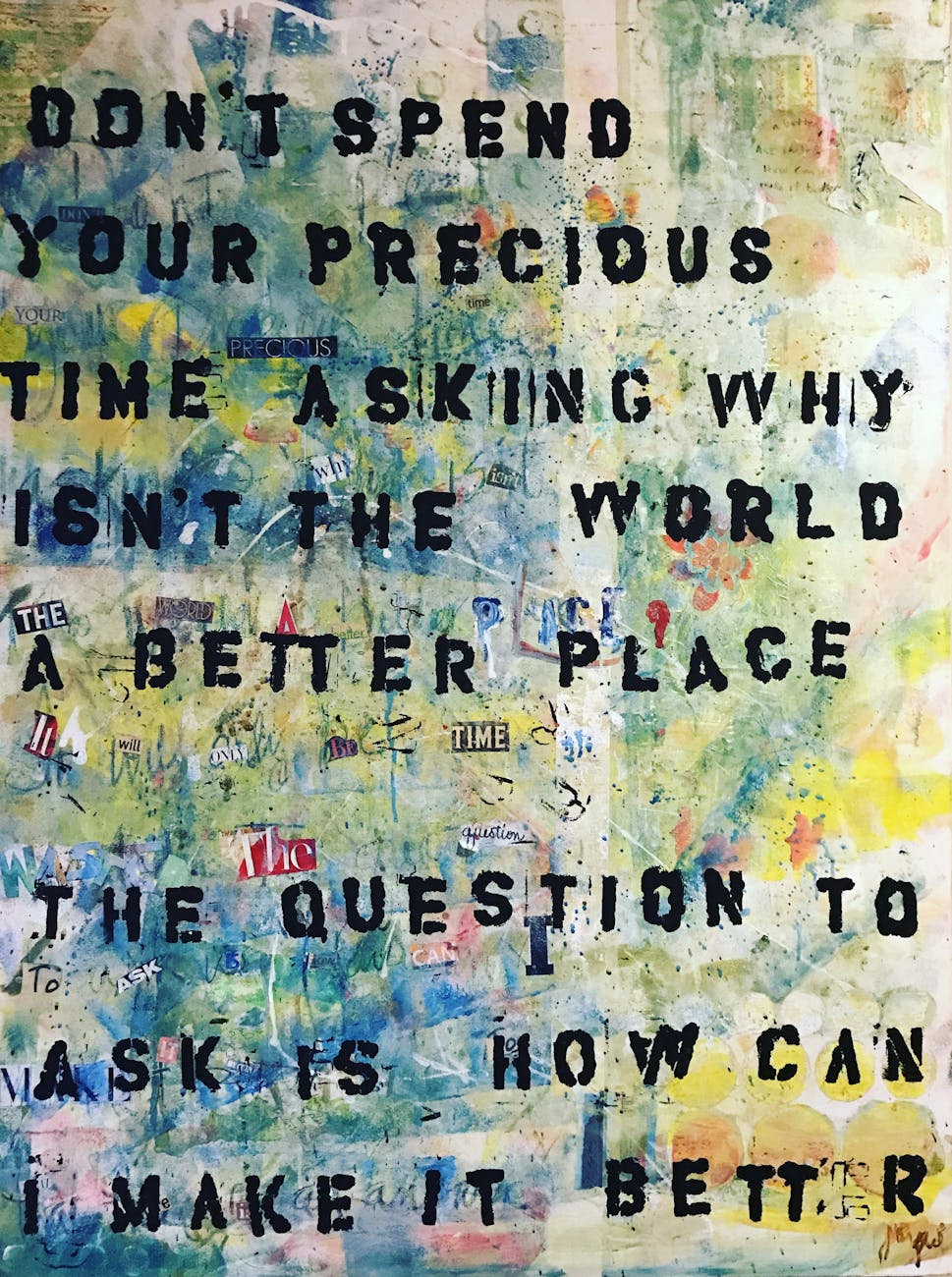
David Brooks’ essay highlights a culture struggling with moral clarity. Alasdair MacIntyre argues that community is essential for virtue. Rebuilding relationships requires simple, consistent gestures of care and presence, fostering trust, and addressing the disconnection prevalent in modern life.