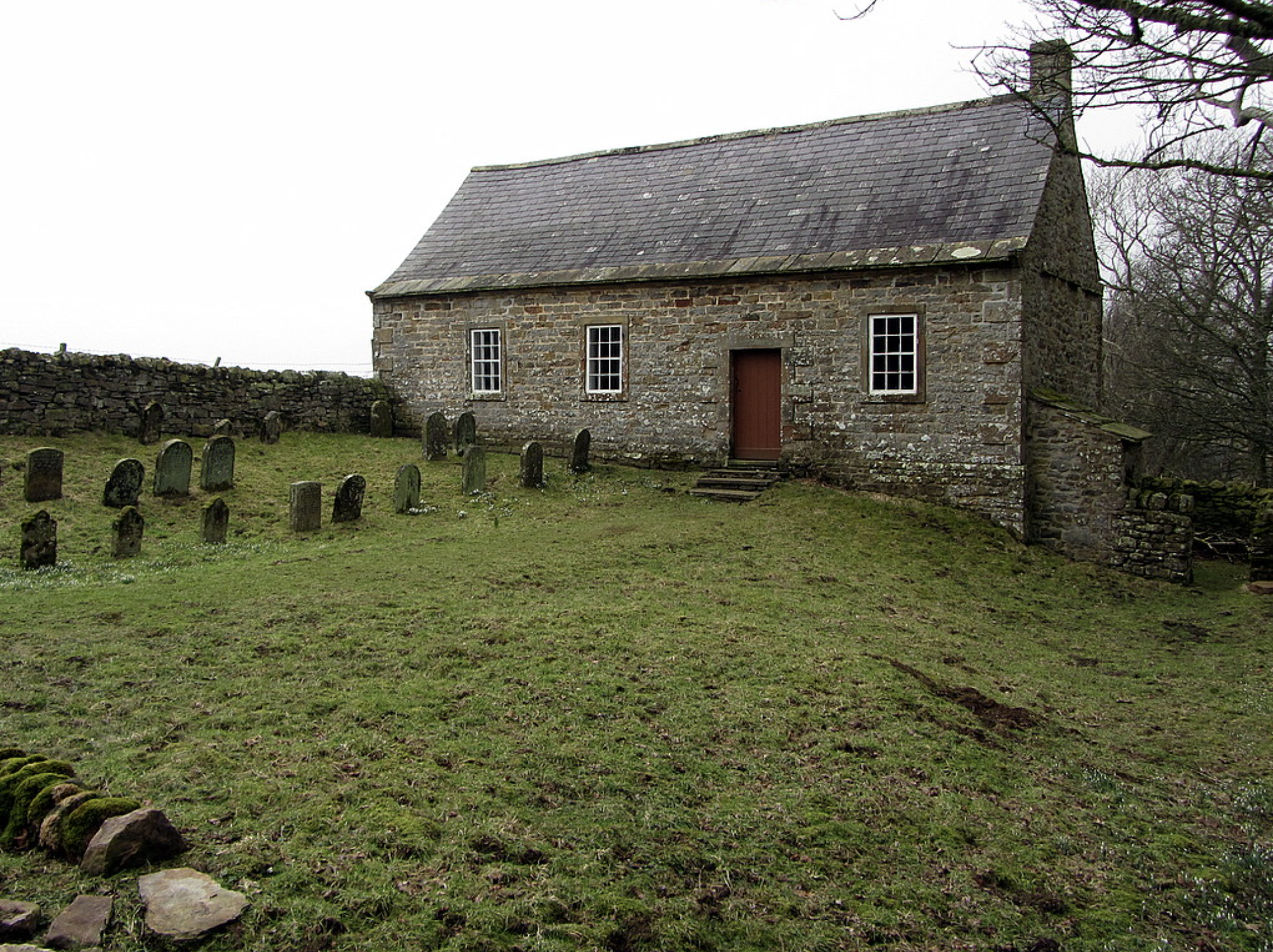
As someone with Quaker roots, I grew up with a story about a family member who, centuries ago, broke with the rest to fight for his country. In his community, participation in war was not accepted. That same conviction has shaped my education at a Quaker school through the historic peace testimony, which rejects war on moral grounds (Fox et al.; Britain Yearly Meeting, ch. 24).
“Pacifism” is the conventional label, but it fails to capture the origin of the claim. The Quaker rejection of war is not a policy preference. It follows from a theological premise. If there is “that of God” in every person, then the moral status of each life is nonnegotiable. Organized killing is therefore not merely tragic. It violates the divine reality present in those it destroys. To participate in war is to deny in practice the belief one affirms (Barclay 67–71).
Understanding the Quaker position on war rests on three elements: renunciation, practice, and conviction. Taken together, these elements reveal that Quaker opposition to war is not simply a stance against violence but a system for preserving how a community thinks, governs, and forms conscience.
Renunciation
In 1660, Quakers declared to Charles II that they denied “all outward wars and strife and fightings” and rejected violence “for any end, or under any pretence whatsoever” (Fox et al.).
Their language allows no exceptions. It does not distinguish between defensive and offensive war but renounces war in all its forms. This tenet became central to Quaker identity. Historians consistently identify the peace testimony as a defining feature of the tradition across centuries (Dandelion 103–05).
Although Quakers have disagreed over strategy, taxation, and civic participation, this boundary has held. During the crisis of the French and Indian War in 1755–56, Quaker members of the Pennsylvania Assembly withdrew rather than authorize military appropriations. Their withdrawal demonstrated that the testimony functioned as a political limit, not merely a symbolic stance (Brock 214–18).
The renunciation of aggression constrains what counts as legitimate action and therefore demands alternatives. A community that prohibits war must determine what replaces it. Early Friends described this shift as a change in the mode of conflict, often called the “Lamb’s War,” in which coercion is rejected but moral struggle persists. In 1756, they formed the Friendly Association for Regaining and Preserving Peace with the Indians by Pacific Measures as a diplomatic effort to reduce violence without resorting to arms (Bryn Mawr College).
Practice
Quakerism embeds its antiwar position in communal procedure. The peace testimony is not treated as an externally imposed rule but is formed and sustained through practice. It is the outward shape taken by shared spiritual experience rather than an abstract belief.
Quaker meetings seek cohesion but not consensus; silence is often more prevalent than speech. Quaker practices intentionally protect individual conscience within the community while resisting coercion and ‘group think’.
The Quaker tradition cultivates noncoercive governance while also rejecting violence; it does not seek unity for the sake of organizing social sentiment or creating opposition (Britain Yearly Meeting, ch. 3).
Periods of war place this structure under pressure. Governments may impose conscription, require compliance, or penalize non-participation. To retain independence, the American Friends Service Committee was formed in 1917 to organize alternatives consistent with the peace testimony (American Friends Service Committee).
Relief work and medical service emerged as formal alternatives, allowing members to remain accountable without crossing the boundary against participation in violence. During the Second World War, many conscientious objectors served in Civilian Public Service camps, performing conservation, medical, and mental health work in lieu of armed service (National Park Service).
This arrangement was not uniformly accepted. Scholarship on the Friends Ambulance Unit during the First World War documents sustained debate over whether service adjacent to military systems compromised the testimony itself (Royle 8–12). The dispute revealed how difficult it is to remain nonviolent while operating within institutions connected to war.
Conviction
More recent scholarship connects the Quaker peace testimony to theology, specifically to the belief that violence reshapes how people perceive and judge others (Dandelion 118–22). War requires participants to think in categories: ally or enemy, preservation or expendability, necessity or restraint. This mode of judgment is not confined to the battlefield; it is both conceptual and physical. Over time, war habituates these distinctions, extending them far beyond combat.
Quakers have long argued that organized killing alters how people understand moral responsibility. Twentieth-century Quaker statements describe armaments as breeding “suspicion and fear” within societies (Britain Yearly Meeting, ch. 24).
This is why contemporary Quaker debates over aggression and atrocity remain unsettled. The peace testimony does not ignore difficult cases. However, it posits that once normalized, violent practices reshape the moral habits of the society that authorizes them. For example, mid-twentieth-century Quaker statements on nuclear deterrence concluded that both the use and threatened use of nuclear weapons contradict the peace testimony (Britain Yearly Meeting, ch. 24).
Systems and Moral Infrastructure
From a structural lens, Quakerism treats peace as central to its communal life. Renunciation dictates what is prohibited; practice establishes alternatives; and conviction explains why those procedural choices matter.
This amounts to a view of how moral commitments are formed and sustained. If communal practices shape perception, then war is not only an event but a phenomenon that shapes habits of thought. A community that authorizes war will internalize its logic.
For many Friends, the response to war remains clear. If violence affects both personal conscience and public institutions, then refusing war is not simply a prohibition or form of restraint. Avoiding war is fundamental to honoring the divinity within each person, a central tenet of the tradition. Nonparticipation remains a Quaker imperative, grounded in the belief that conscience must not be subordinated to violence. From this perspective, peace is not simply the absence of war; it is the condition necessary for moral judgment to remain intact.
Sources and Further Reading
American Friends Service Committee. “History.” American Friends Service Committee, https://afsc.org/history.
Barclay, Robert. An Apology for the True Christian Divinity. Quaker Heritage Press, https://www.qhpress.org/texts/barclay/apology/.
Brock, Peter. Pacifism in the United States: From the Colonial Era to the First World War. Princeton UP, 1968. Google Books, https://books.google.com/books?id=WD_WCgAAQBAJ.
Bryn Mawr College. Friendly Association Papers. Tri-College Digital Collections, https://digitalcollections.tricolib.brynmawr.edu/collections/friendly-association-papers.
Britain Yearly Meeting. Quaker Faith & Practice. https://qfp.quaker.org.uk.
Dandelion, Pink. An Introduction to Quakerism. Cambridge UP, 2007. Google Books, https://books.google.com/books?id=E4hdNqKz0agC.
Fox, George, et al. “A Declaration from the Harmless and Innocent People of God, Called Quakers … Concerning Wars and Fightings.” Quaker Heritage Press, https://www.qhpress.org/quakerpages/qwhp/dec1660.htm.
National Park Service. “Patapsco Camp (WWII Civilian Public Service Site).” National Park Service, https://www.nps.gov/places/patapsco-camp-wwii-civilian-public-service-site.htm.
Royle, Edward. “The Friends’ Ambulance Unit in the First World War.” Religions, vol. 9, no. 5, 2018, doi:10.3390/rel9050165.
Leave a Reply