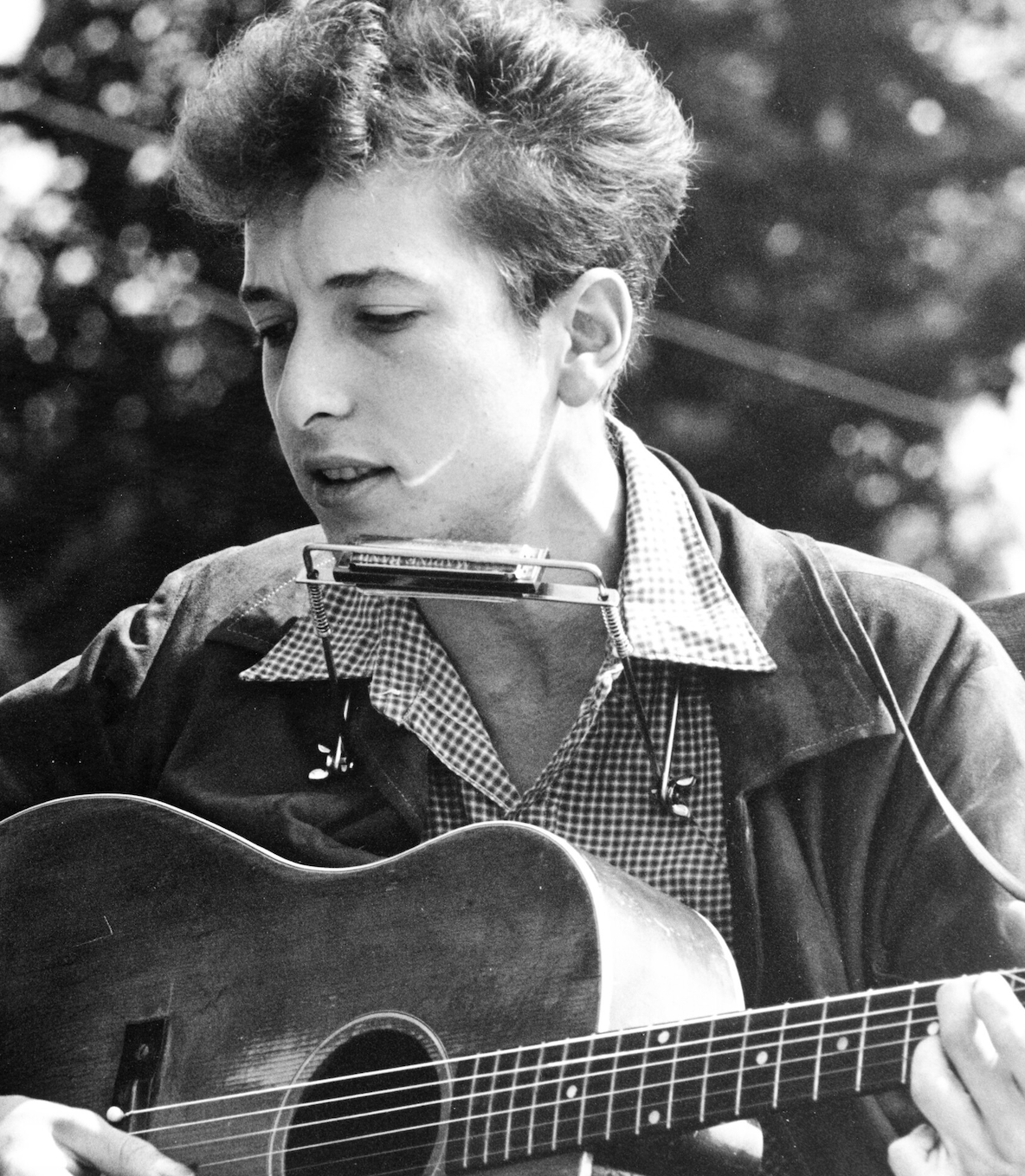
By Declan McDonnell
Bob Dylan’s 1963 protest song reframes Medgar Evers’ assassination as more than an isolated tragedy.
It indicts systemic racism and class manipulation deeply embedded in American society.
The Civil Rights Movement of the 1960s responded not just to visible violence and legal discrimination. It confronted the hidden machinery of systemic racism embedded deeply in American society. Among the tools activists employed, protest music arose as a powerful force for raising consciousness and exposing injustice. Bob Dylan’s 1963 song, Only a Pawn in Their Game, stands out for its unsettling critique of racial division. Bob Dylan wrote the song in response to NAACP leader Medgar Evers’ assassination, highlighting systemic white supremacy. It explores how poor white Americans are used as tools in maintaining racial oppression, not just the killer’s actions.
Through this framing, Bob Dylan compels listeners to consider how racial violence is incentivized and perpetuated by systemic manipulation.
While controversial, the song offers an unprecedented critique of classism, reaching audiences through a widely public medium. It provides an unflinching structural critique of racist classism that sparked debate across the country. Bob Dylan ensured the song’s message was widely discussed and spread nationally.
Bob Dylan’s Only a Pawn in Their Game
Only a Pawn in Their Game by Bob Dylan emerged in the volatile summer of 1963. It followed the assassination of Medgar Evers in Jackson, Mississippi. Evers, a field secretary for the NAACP, was shot in his driveway by white supremacist Byron De La Beckwith. While the act shocked the nation, Bob Dylan focused on the systemic forces behind such violence, not just the individual murderer.
According to NPR’s coverage of the song’s legacy, Bob Dylan sought to illuminate “the big picture,” portraying the assassin not as a monstrous outlier, but as a tool of a power structure that cultivated and directed racial hatred for its own ends. For a related discussion on systemic oppression in literature, see our post on Colonial Violence in Literature: Narrative Power & Resistance. This reorientation of blame from the individual to the institution marked a radical departure from popular responses to Evers’ murder.
Dylan responded not with outrage at the individual murderer, but with a meditation on the systemic forces that bred such violence.
The March on Washington
Dylan also performed the song at the historic March on Washington in August 1963, positioning his work alongside the most iconic voices in civil rights history. As David Lai observes, reactions to Evers’ murder were deeply polarized. Civil rights activists saw it as proof of systemic racism, while Southern politicians dismissed it as an isolated act. Meanwhile, Dylan’s focus on structural forces makes the song more than a reaction to a single tragedy. It also critiques narratives that attempted to depoliticize racial violence. Furthermore, the song’s origin lies in confronting myths that protected white supremacy, not just in artistic inspiration.
Exposing The Systemic Manipulation
The core purpose of Only a Pawn in Their Game is to indict the systemic forces that manipulate poor whites into enacting racial violence against Black Americans. Rather than centering on moral outrage alone, Dylan delves into the mechanics of social control, emphasizing how political and economic elites sustain racial divisions to maintain their own power.
According to Matt Schickling, Dylan’s framing mirrors W.E.B. Du Bois’ theory of the “psychological wage.”
Here, poor white workers gain symbolic racial superiority instead real economic mobility. Consequently, this arrangement keeps them loyal to the system that oppresses them. It also uses a divide-and-conquer strategy that prevents solidarity across racial lines.
Bob Dylan’s Layered Lyricism and Messaging
Consequently, Bob Dylan ensured the song’s message was widely discussed and spread nationally. Meanwhile, Bob Dylan Only a Pawn in Their Game emerged in the volatile summer of 1963. His use of understated language and metaphor, Atwood explains, encourages reflection rather than righteous indignation—inviting audiences to contemplate how structural racism operates invisibly through institutions, rather than through overt hatred alone.
Dylan’s purpose, then, is not to comfort or affirm, but to provoke discomfort—to peel back the veil of individual responsibility and reveal the invisible hands that set the chessboard.
Bob Dylan Provokes Reflection Over Comfort
Only a Pawn in Their Game by Bob Dylan does not offer easy resolutions or emotional catharsis. Instead, it shows the listener how systems of power cultivate, justify, and deploy violence. Furthermore, its strength lies in disrupting prevailing narratives and demanding reckoning with structures that perpetuate racial injustice. Thus, it leaves an enduring legacy as protest music with teeth.
Sources
- Atwood, Tony. “Only a Pawn in Their Game: Meaning and Origins.” Untold Dylan, 2016. https://bob-dylan.org.uk/archives/7326
- Lai, David. “Too Great a Price: National Responses to the Assassination of Medgar Evers.” The Martin Luther King, Jr. Research and Education Institute, Stanford University. https://kinginstitute.stanford.edu/research-showcase-too-great-price-national-responses-assassination-medgar-evers
- NPR Staff. “Bob Dylan’s Tribute to Medgar Evers Took on the Big Picture.” NPR, June 12, 2013. https://www.npr.org/2013/06/12/190743651/bob-dylans-tribute-to-medgar-evers-took-on-the-big-picture
- Schickling, Matt. “White Identity, Economic Anxiety, and Dylan’s ‘Only a Pawn in Their Game’.” Sounding Out!, June 10, 2019. https://soundstudiesblog.com/2019/06/10/white-identity-economic-anxiety-and-dylans-only-a-pawn-in-their-game/
Leave a Reply